PoshLayer™ Flow: a big job, reduced to one button
Adding a town to the areas a business covers used to mean emailing the agency and waiting. Here is the same job done from a phone, in four steps.
Start here
A bathroom fitter in south Manchester has done three jobs in Chorlton. His website lists the areas he covers and Chorlton is not one of them, so as far as anybody searching is concerned he does not work there. Adding an area means emailing the agency and waiting.
PoshLayer™ Flow turns that into one action he presses himself, from his phone. Here it is, start to finish.
Table of contents
What it costs him today
He rings, or emails, and the job enters somebody else’s week.
- An email asking for a new area page.
- A wait, because it is small and everything else is bigger.
- Someone writes copy about Chorlton without having been there.
- Someone adds the page to the menu, and to the list of areas, and to the sitemap, and remembers the postcodes.
- An invoice for an hour of work.
None of that is anybody behaving badly. It is what a small job costs once it has to travel through five hands, and it is exactly why the small job usually gets skipped — by the time it is done, he has finished two more jobs in Whalley Range and stopped mentioning either.
The same job, as a flow
This is how PoshLayer™ Flow does it instead. Four steps, all of them on his phone, from the town he wants to add to the page being live on his site.
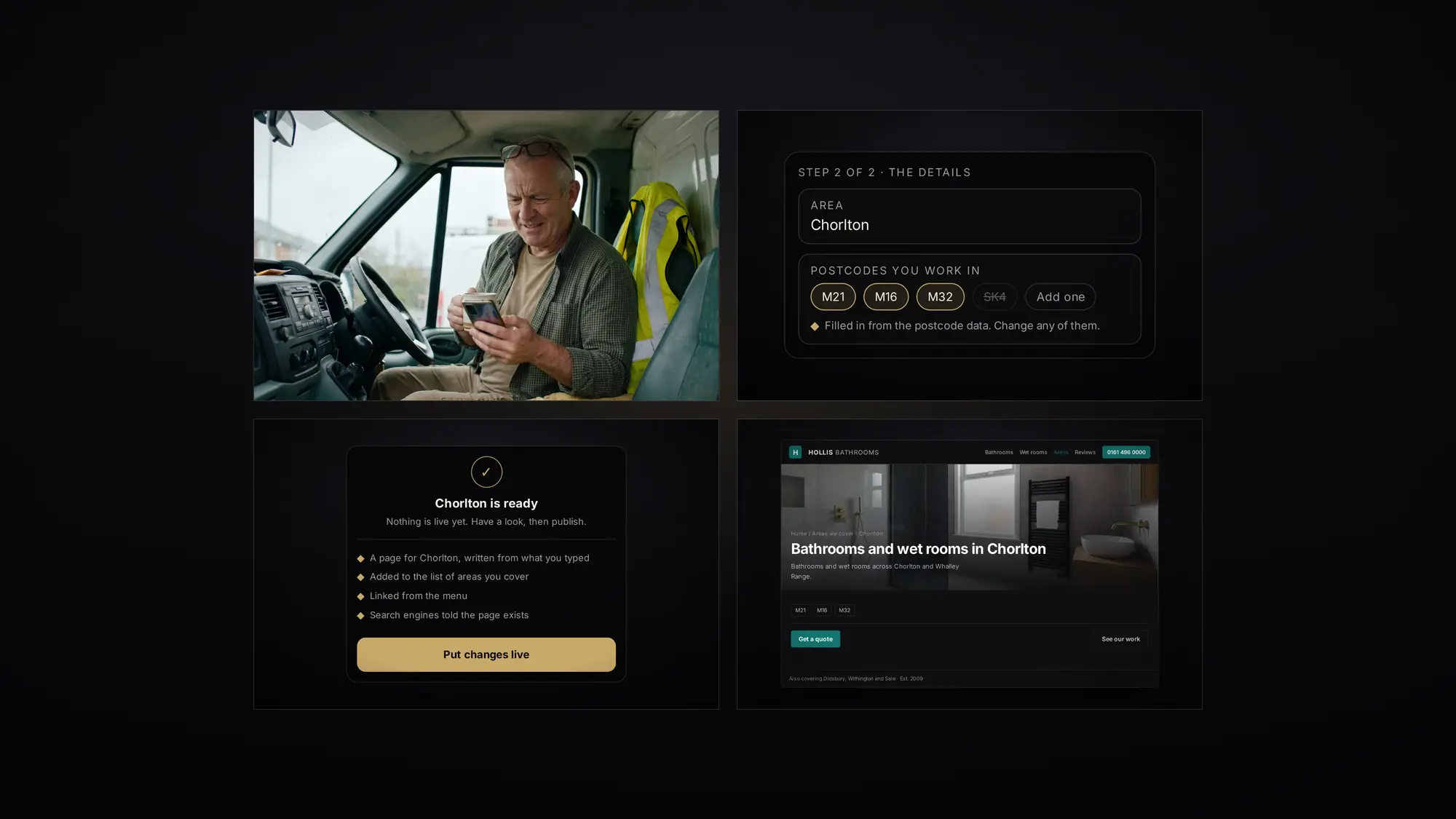
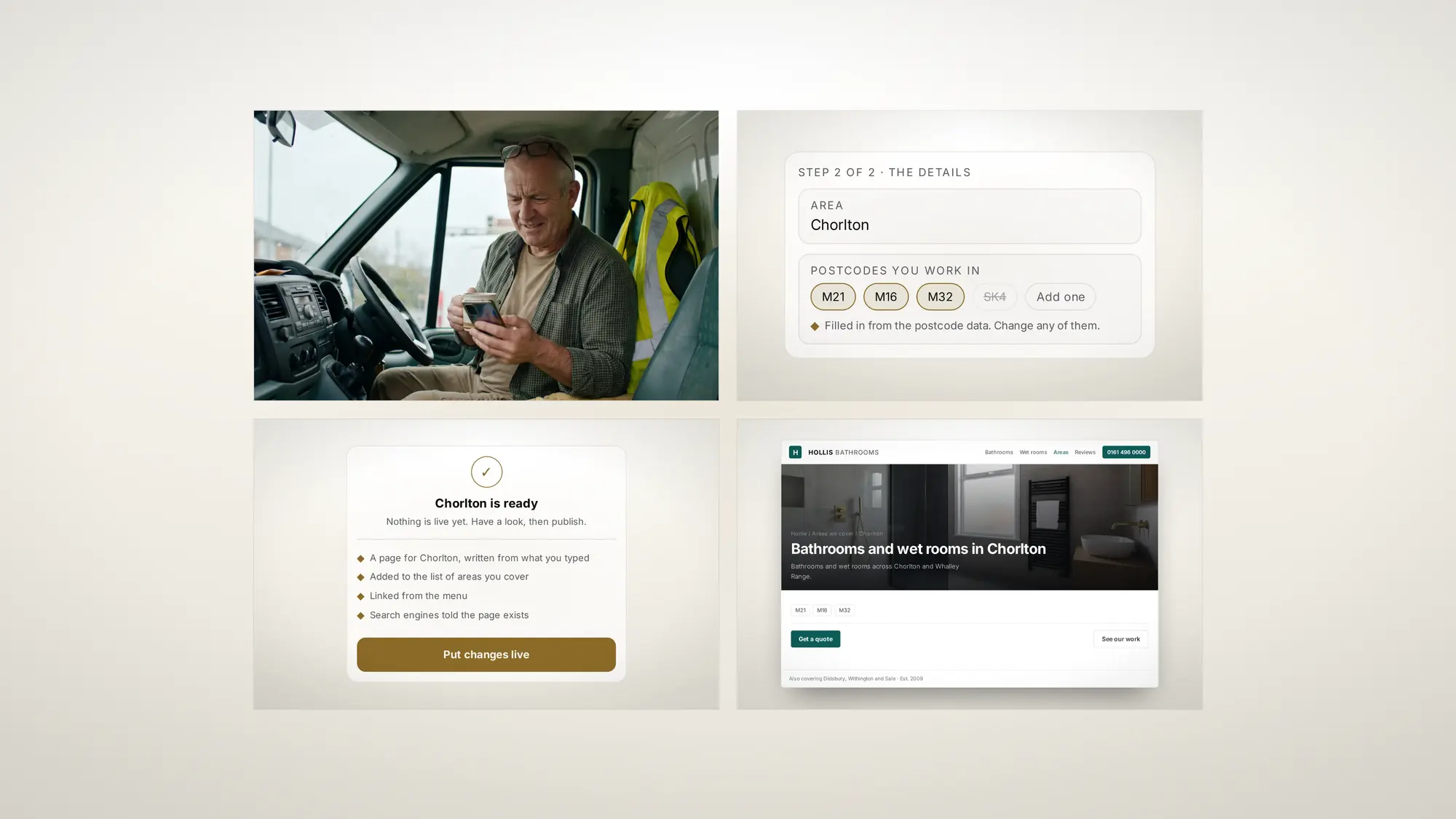
 Three jobs done in Chorlton, and the website still does not say he works there. Instead of emailing the agency, he opens Desk and presses Add an area you cover.
02The postcodes arrive filled in
Three jobs done in Chorlton, and the website still does not say he works there. Instead of emailing the agency, he opens Desk and presses Add an area you cover.
02The postcodes arrive filled in
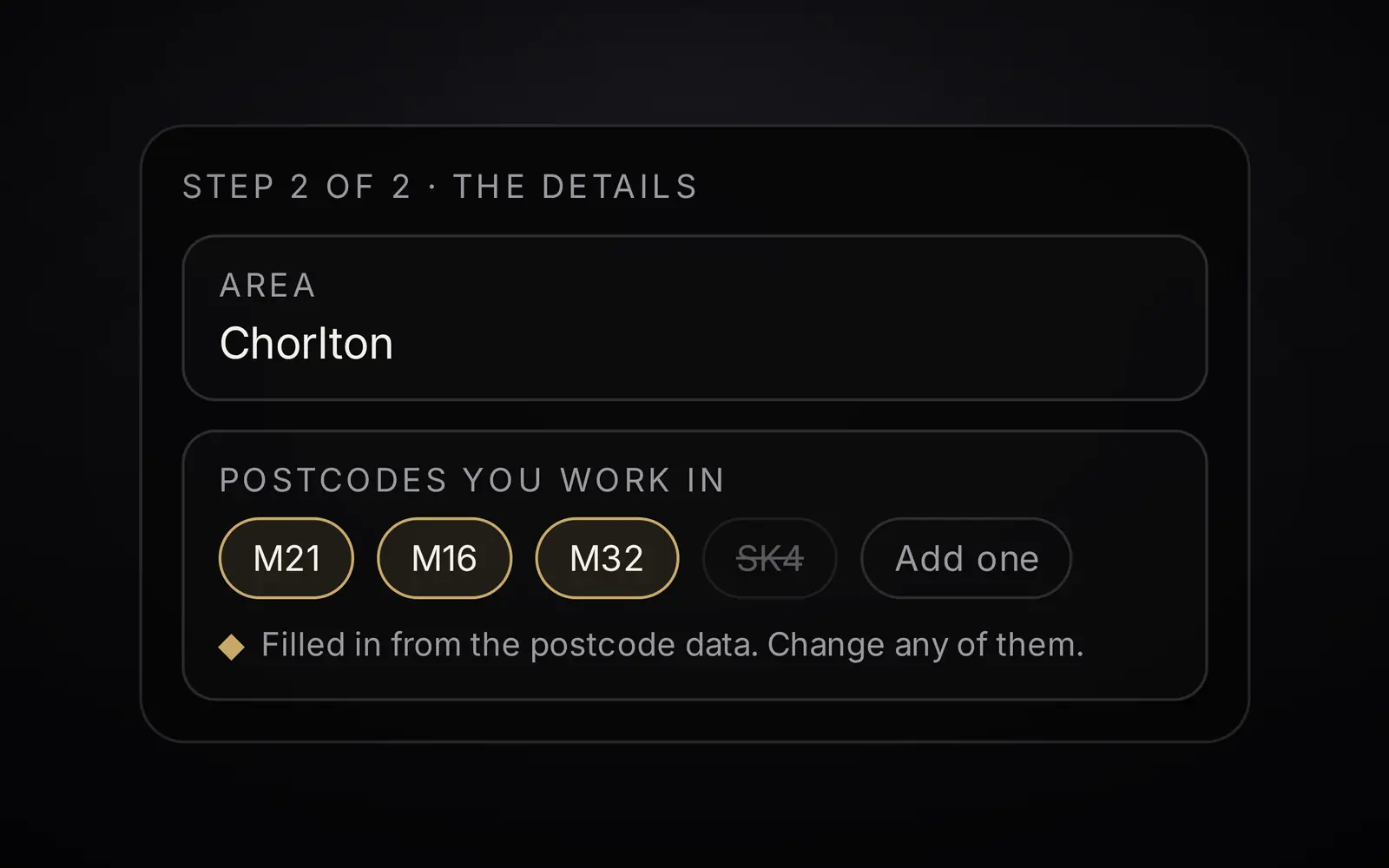
 He types the town and the postcodes arrive from the data, not from a guess. He strikes out the one he does not travel to, and writes the line about the area himself.
03What it did, and what it has not
He types the town and the postcodes arrive from the data, not from a guess. He strikes out the one he does not travel to, and writes the line about the area himself.
03What it did, and what it has not
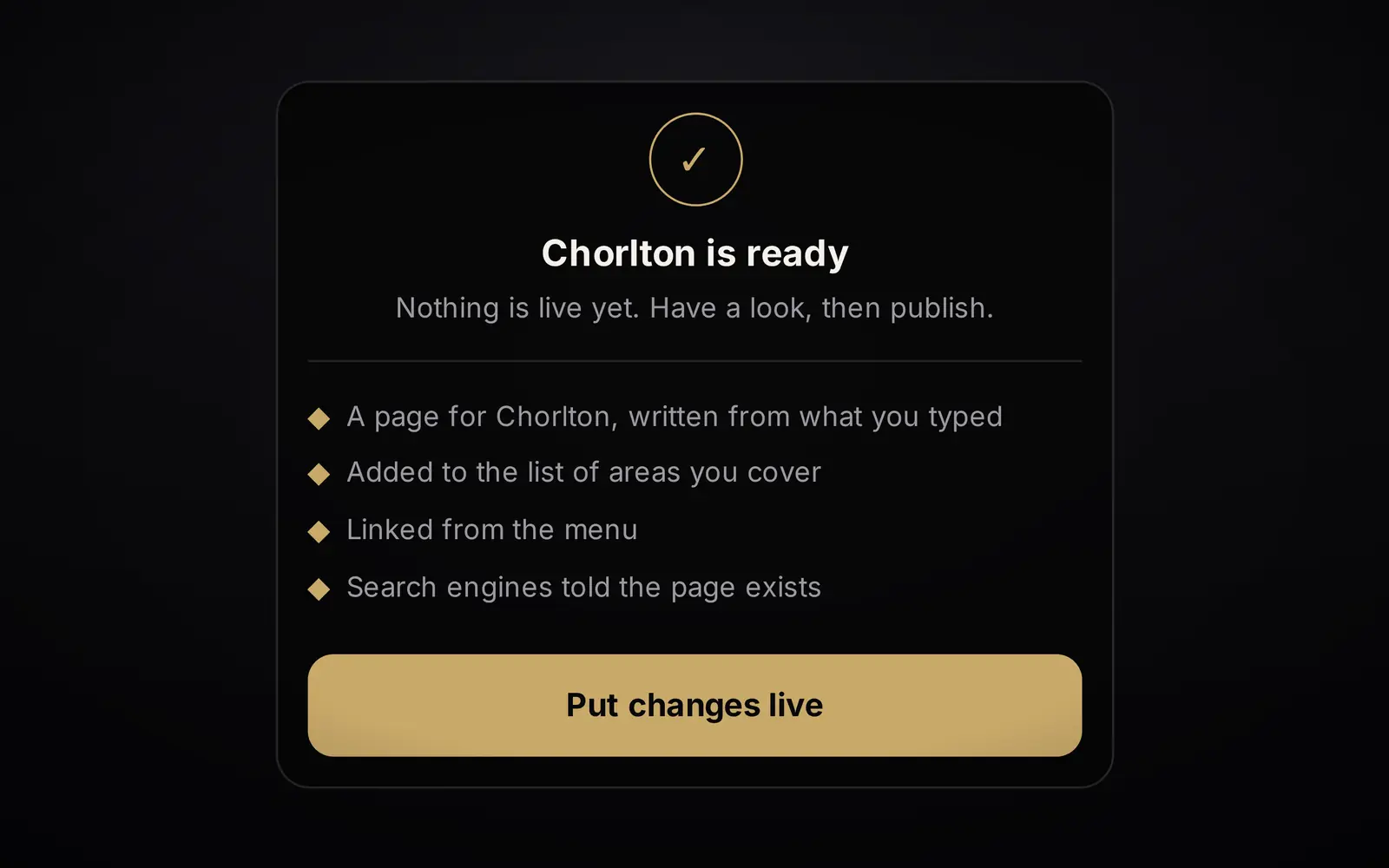
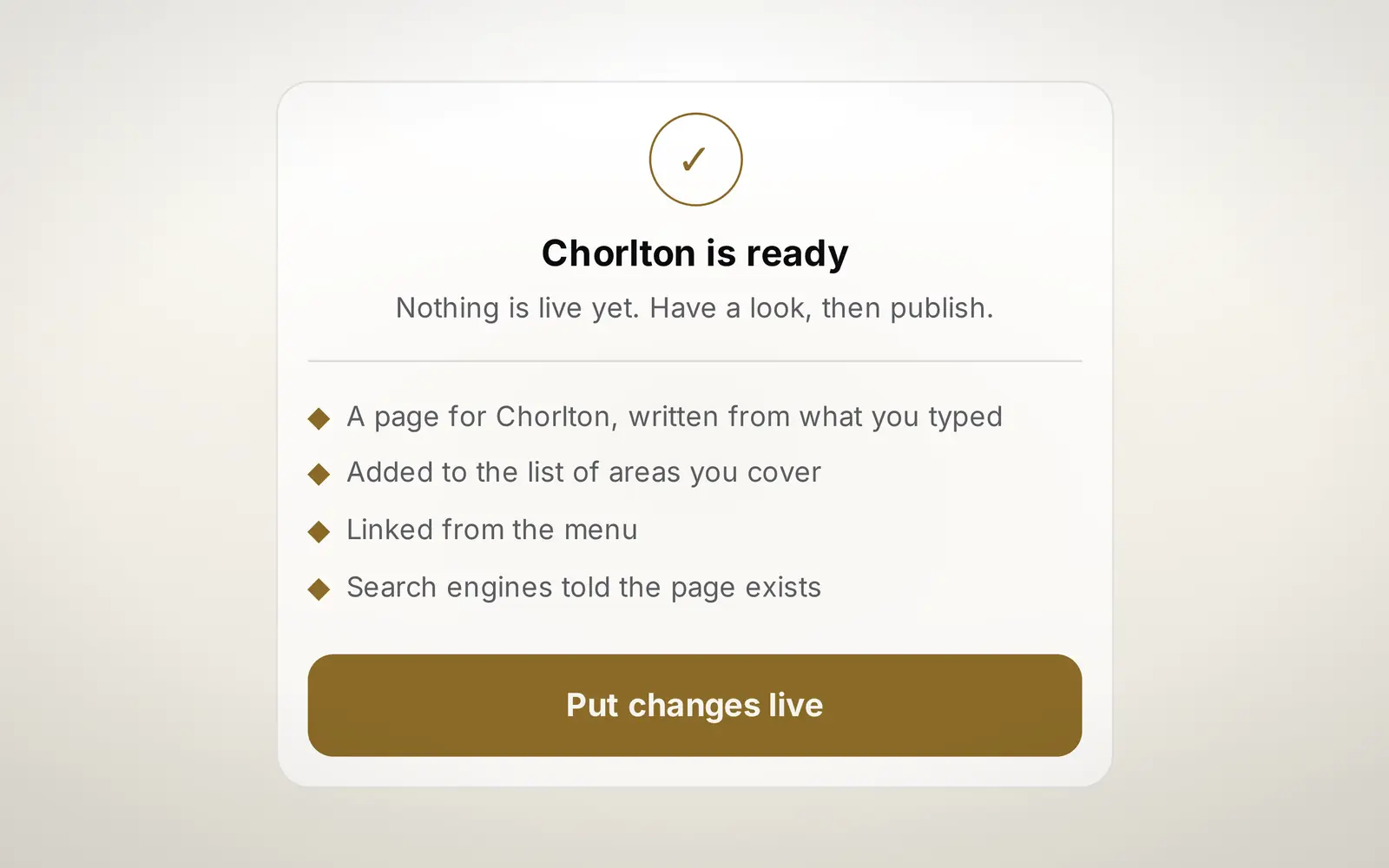 PoshLayer™ Flow writes the page, lists it, links it, and tells search engines it exists. Then it stops — nothing is public until he presses the second button.
04His site, that afternoon
PoshLayer™ Flow writes the page, lists it, links it, and tells search engines it exists. Then it stops — nothing is public until he presses the second button.
04His site, that afternoon
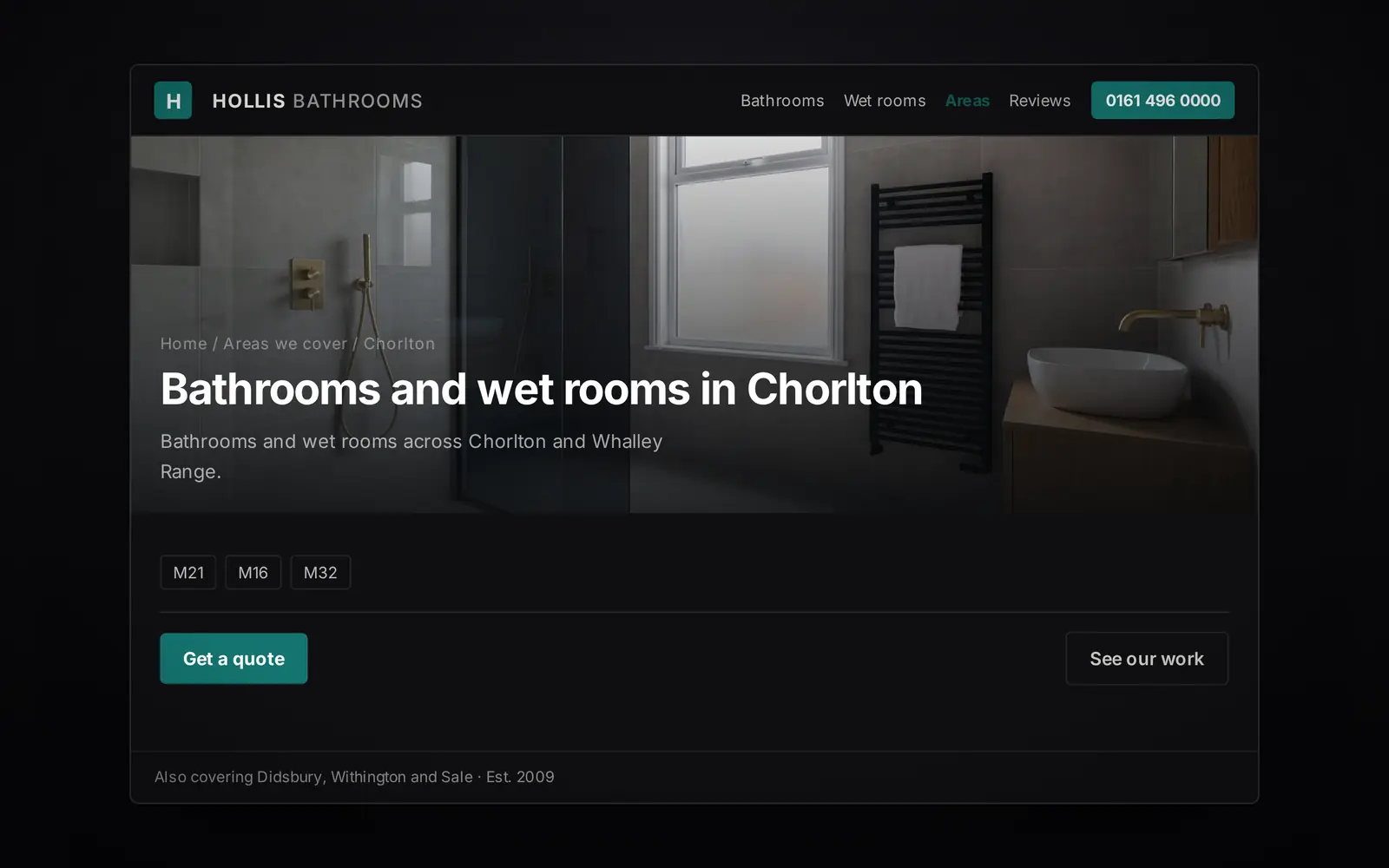
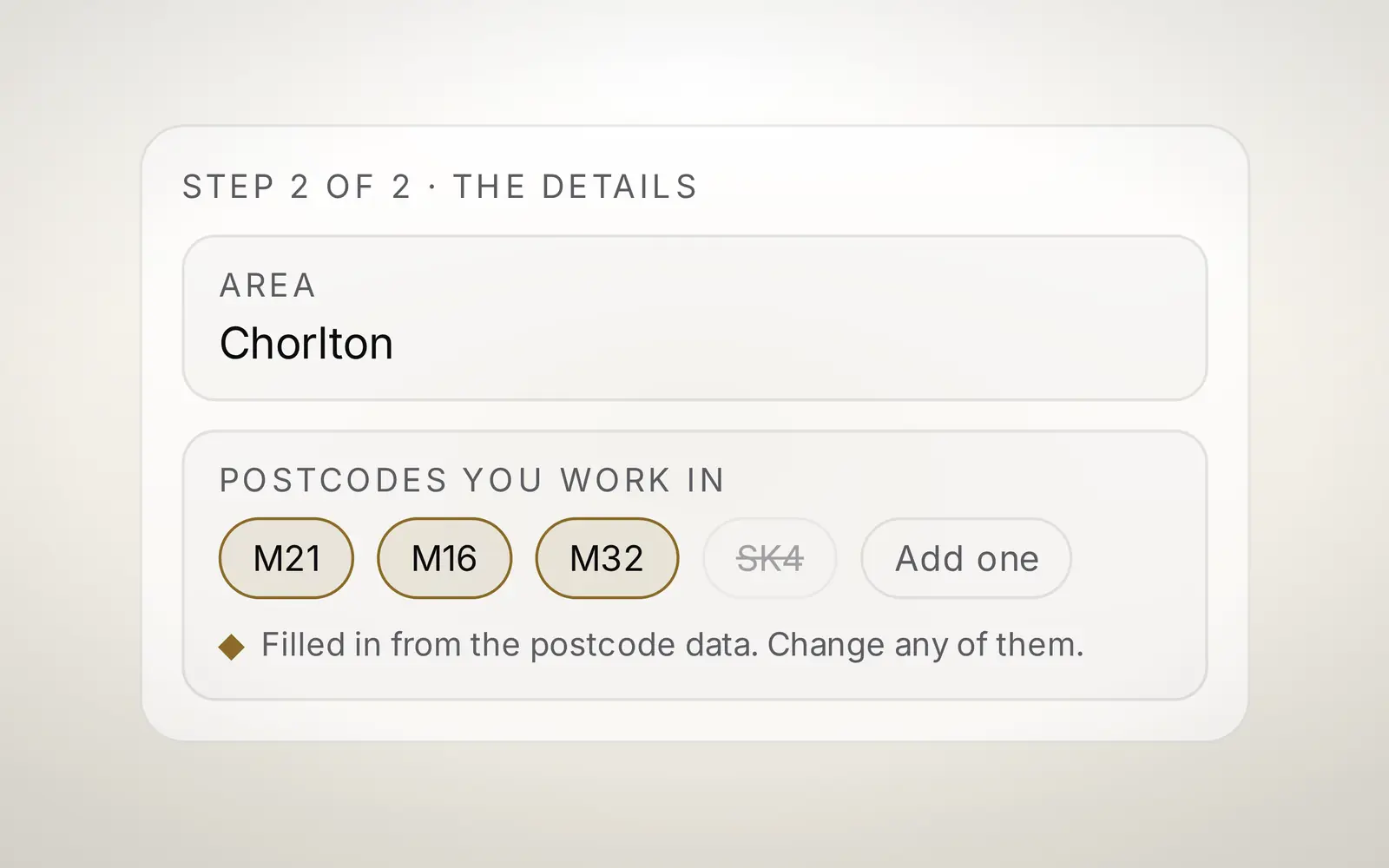
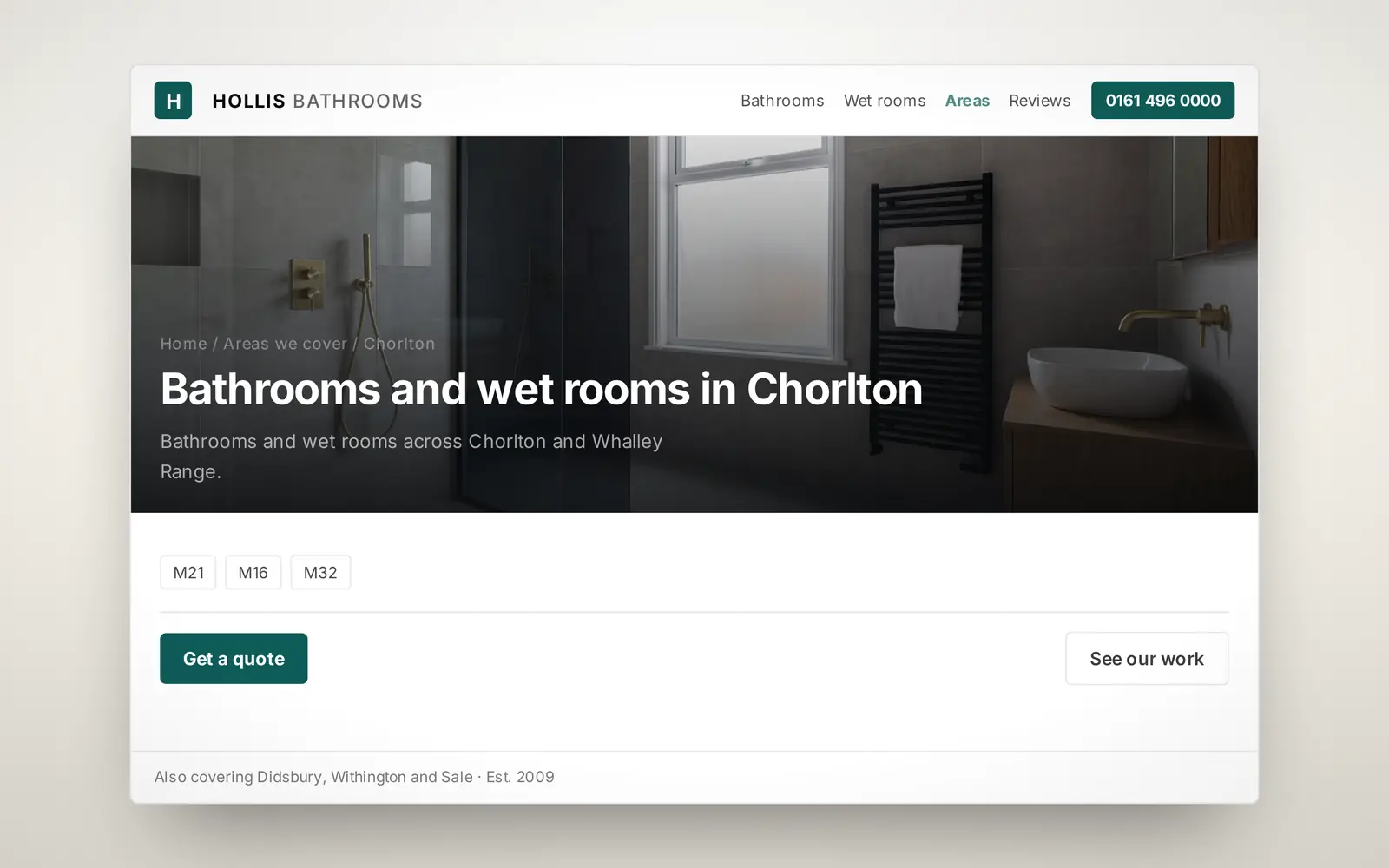 The page is live on his own site, in his own brand, in the navigation. The line under the heading is the one he typed.
Where it gets pressed
Not at a desk. The Desk app is on his phone, and the flows on it are the same flows as on the laptop he never opens.
This matters more than it sounds. A job that can only be done sitting down is a job that waits for the evening, and the evening already has things in it. Ten minutes in a parked van is when this actually gets done.
Three fields, one already answered
The town. The postcodes. One line about the area.
The postcodes are the interesting field. He types the town and they arrive — three of them, from the postcode data, not from a guess. He strikes one out because he does not go that far south, and that is the point of filling a field in rather than deciding it: the suggestion is a starting position, and he is the one who knows the answer.
The last field is his own sentence. Nobody at an agency can write “bathrooms and wet rooms across Chorlton and Whalley Range” for him, because nobody at an agency knows that is what he does there.
Why there are three fields and not thirty
The flow is built from his own business and site together.PJ @ PoshLayer
Because the flow is built from his own business and site together — which jobs he repeats, and the shape of the pages they end up on.
The fields are read from the shape of his actual area pages — not from a form somebody designed for trades in general. That is why there is no field for anything his site does not have, and why a field he gains later turns up here without anyone rebuilding the form.
What it did, and the one thing it did not
Press send, and it does the four things that made this a five-person job: writes the page, adds it to the list of areas, links it from the menu, and tells search engines it exists.
Then it stops.
Nothing is live until he presses the second button. That is deliberate, and it is the difference between an automation you can use in a hurry and one you cannot. A flow that publishes the moment you stop typing is a flow you have to concentrate on. This one can be half-finished at a red light and looked at properly over the tea.
His site, that afternoon
The page is on his own website, in his own brand.PJ @ PoshLayer
The page is on his own website, in his own brand, in the navigation where a customer would look for it. Not a listing on our platform, not a profile page — his. And the sentence under the heading is the one he typed in the van; nothing wrote his copy for him.
What made it possible
Three things, none of them the form.
The flows are generated from the site rather than designed for a sector. They run on a phone because that is where the person is. And the last step is a human pressing publish, which is why the whole thing can be trusted at the side of a road.
The rest of it
This is one flow. A business usually has five or six that matter, and they are obvious once you have watched it work for a fortnight.
What Flow is, and what else it does, and the Desk it lives in.
The measure of this is not the hour it saved. It is that Chorlton is on the site at all — and that Whalley Range will be too, on Thursday, because adding it is no longer a thing he has to ask anybody for.