Introducing PoshLayer™ Flow, the jobs that never get done
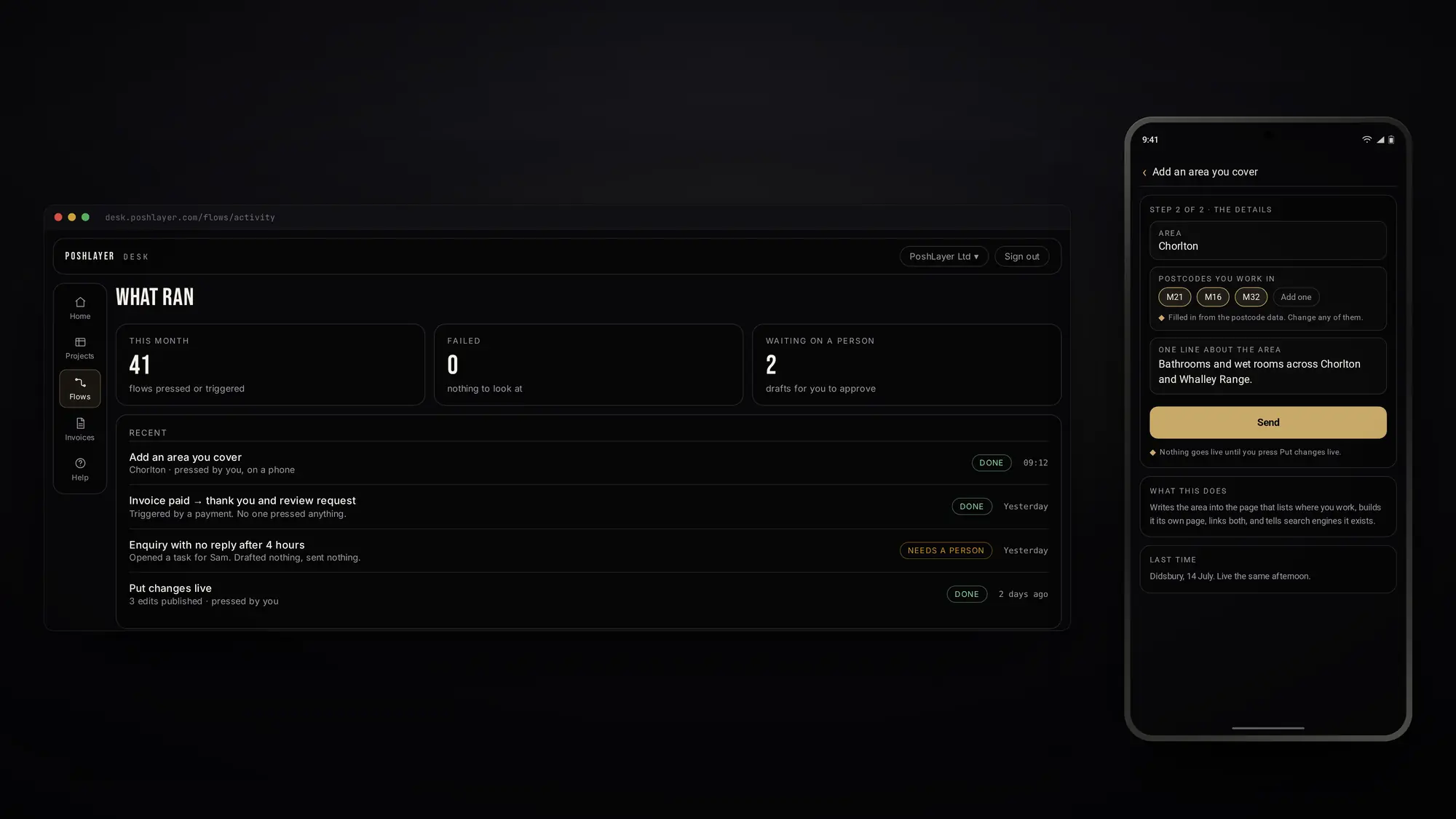
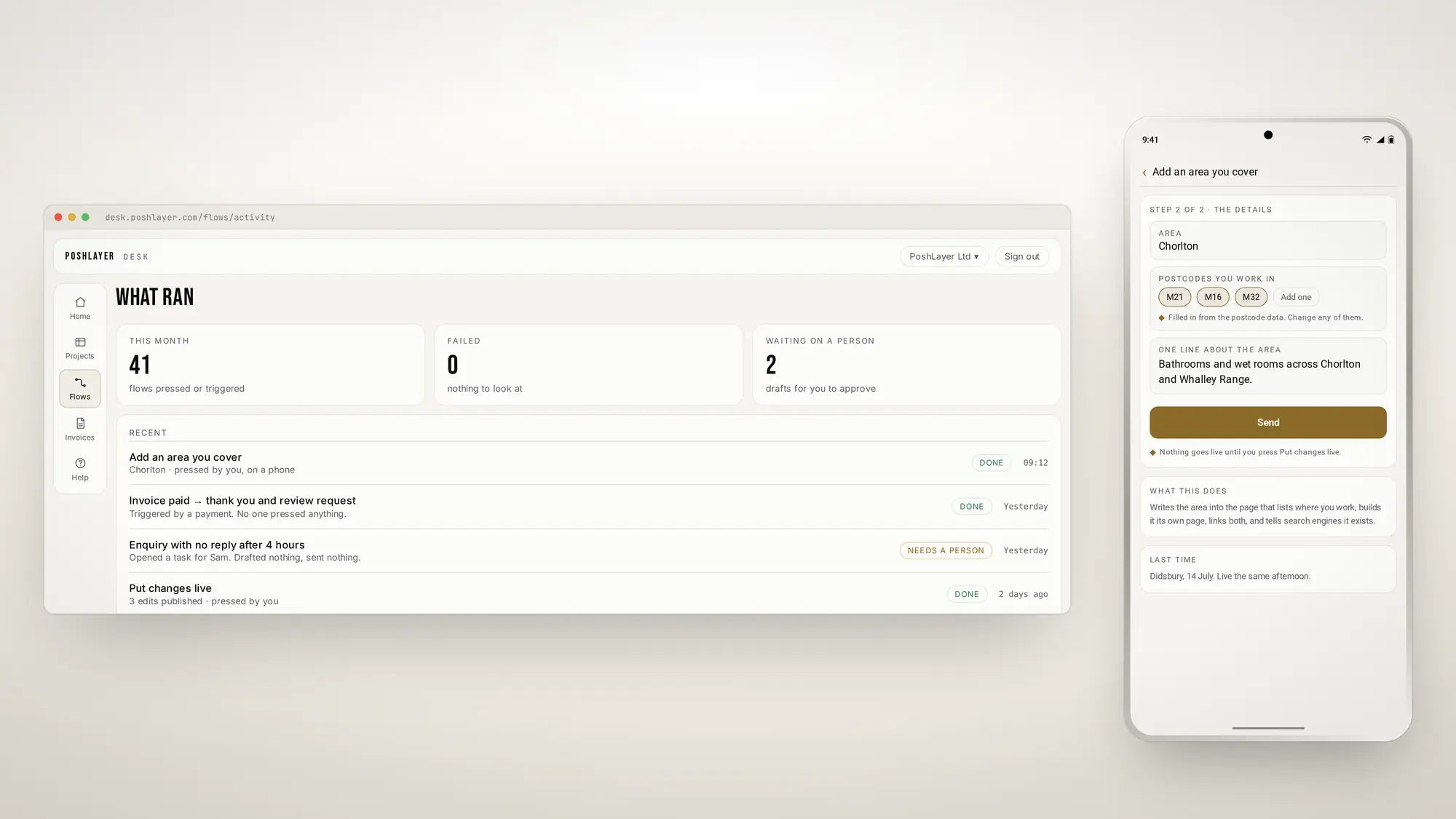
PoshLayer™ Flow turns the things a business does over and over into a single action it can press from a phone. Here is one of them, start to finish.
Start here
There is a particular kind of job that never gets done. It is not hard and it is not expensive. It is the job that needs four people, two of whom are on holiday, and is worth less than the meeting it would take to arrange — so it sits on a list until the reason for doing it has passed.
PoshLayer™ Flow exists for those. It takes a job your business does over and over, and turns it into one thing you press. Not a shortcut to a form: the whole job, including the parts you were never going to remember.
Table of contents
Start with the job, not the software
Take a bathroom fitter in south Manchester. Good work, good reviews, a website that says he covers Didsbury, Withington and Sale.
He has just finished his third job in Chorlton. He would like the website to say he covers Chorlton, because people search for a trade and a place in the same breath, and a page that says the place is the page that gets found.
Here is what that costs him today, at any agency:
- An email asking for a new area page.
- A wait, because it is small and everything else is bigger.
- Someone writes copy about Chorlton without having been there.
- Someone adds the page to the menu, and to the list of areas, and to the sitemap, and remembers the postcodes.
- An invoice for an hour of work.
Weeks later there is a page about Chorlton. He has since finished two jobs in Whalley Range and has stopped mentioning it.
One job, start to finish
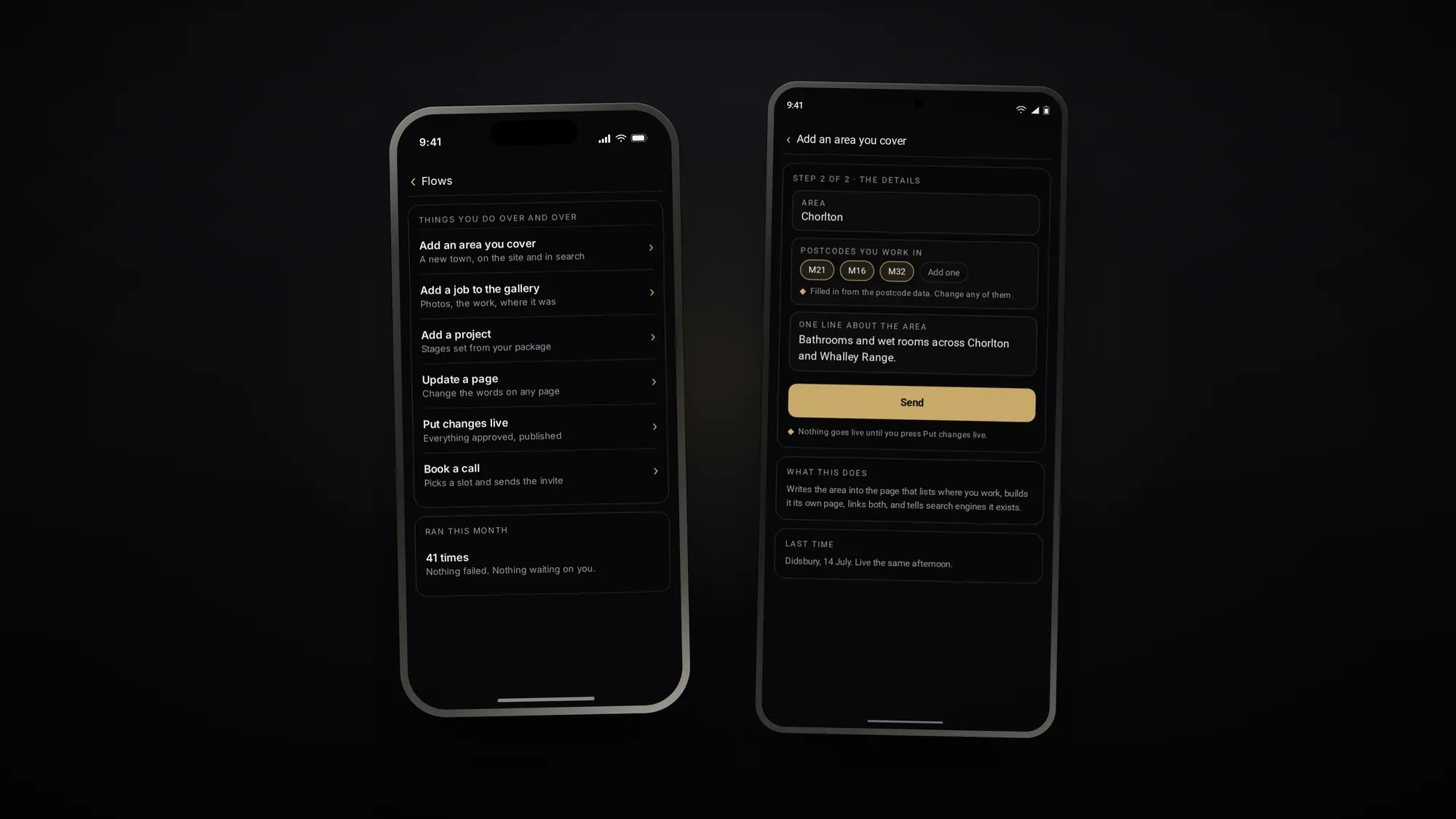
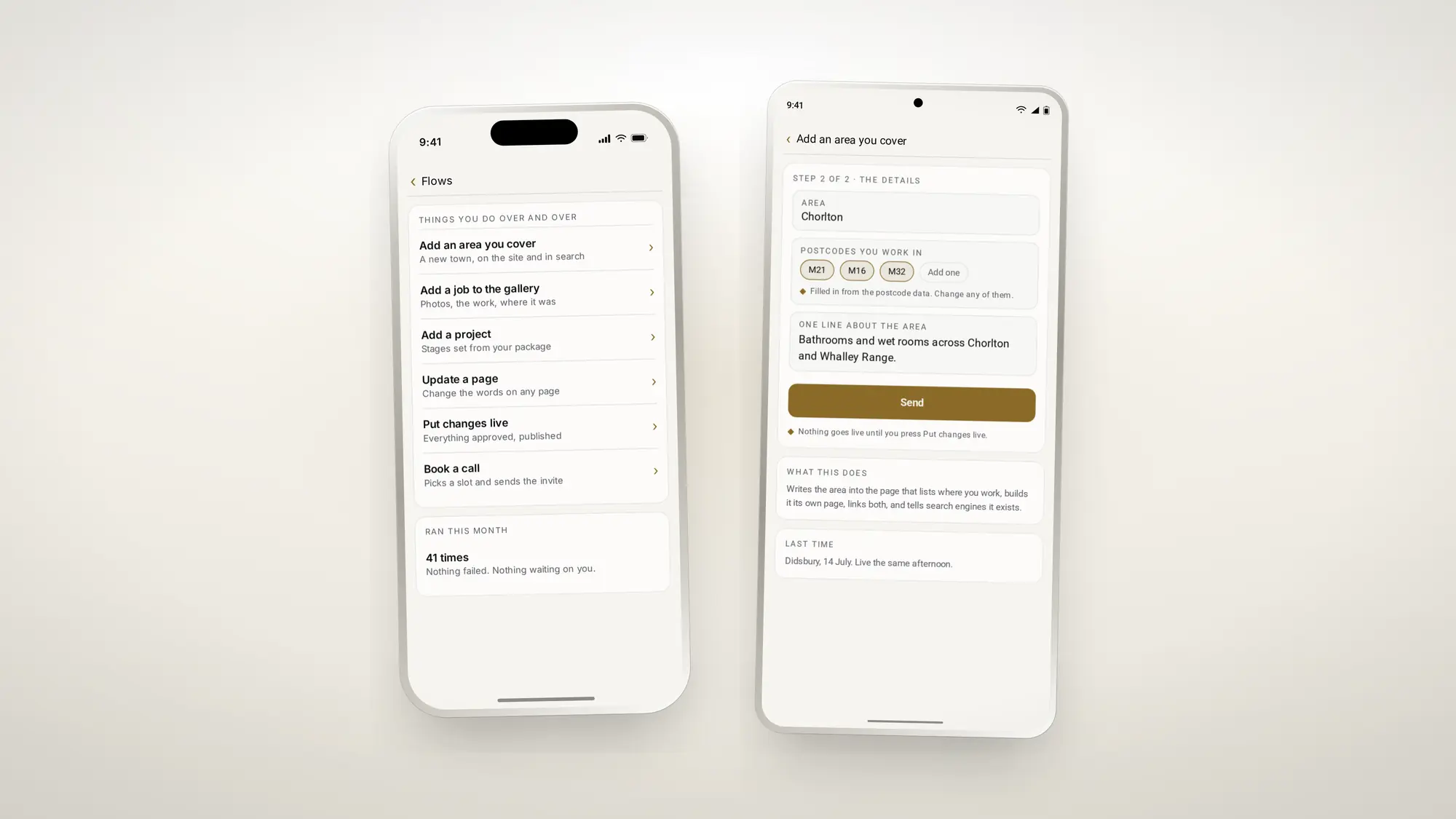
He opens PoshLayer™ Desk on his phone in the van, presses Add an area you cover, fills in three things and sends it. The page exists before he has finished his tea, and goes live when he says so.
 Three jobs done in Chorlton, and the website still does not say he works there. Instead of emailing the agency, he opens Desk and presses Add an area you cover.
02The postcodes arrive filled in
Three jobs done in Chorlton, and the website still does not say he works there. Instead of emailing the agency, he opens Desk and presses Add an area you cover.
02The postcodes arrive filled in
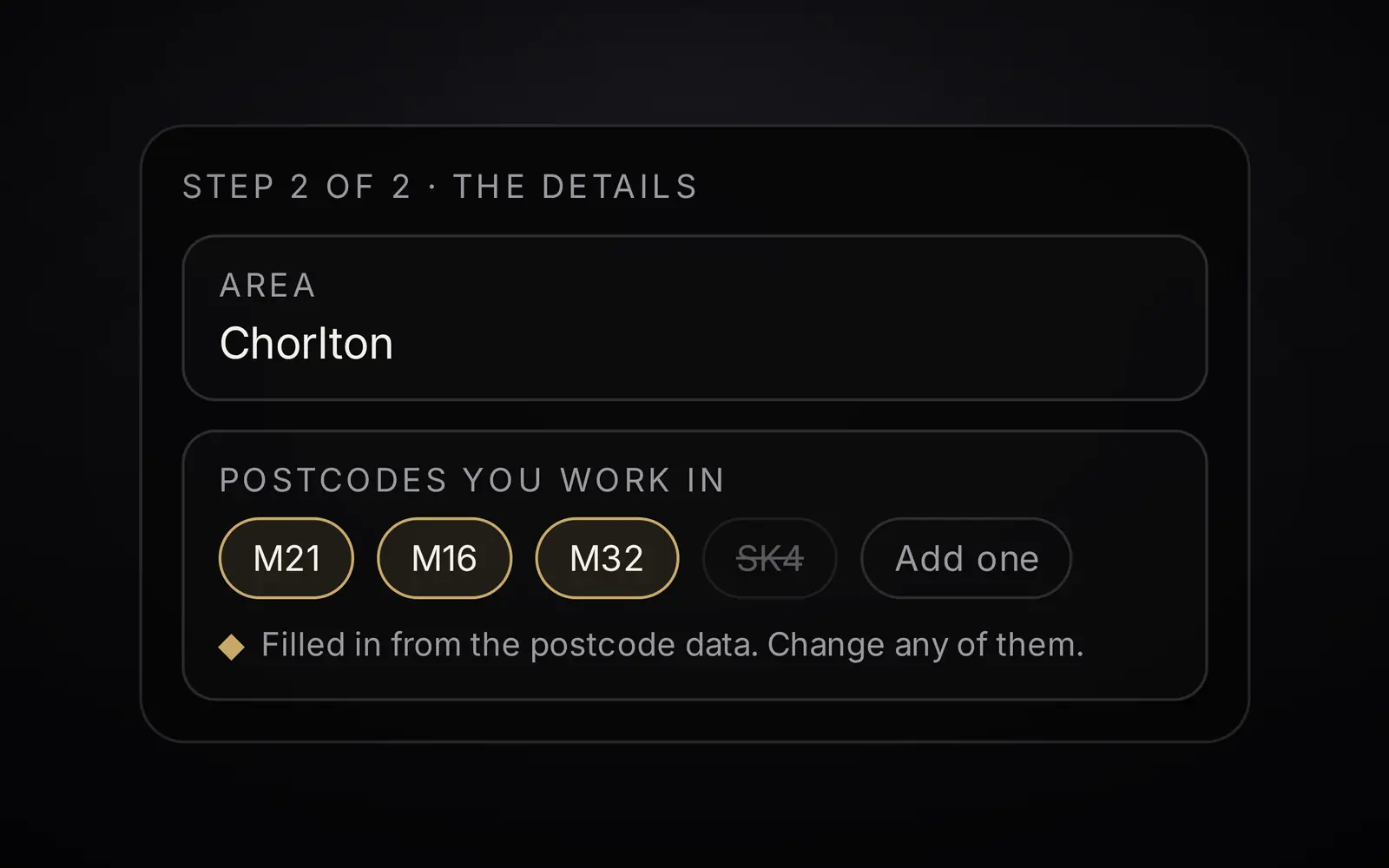
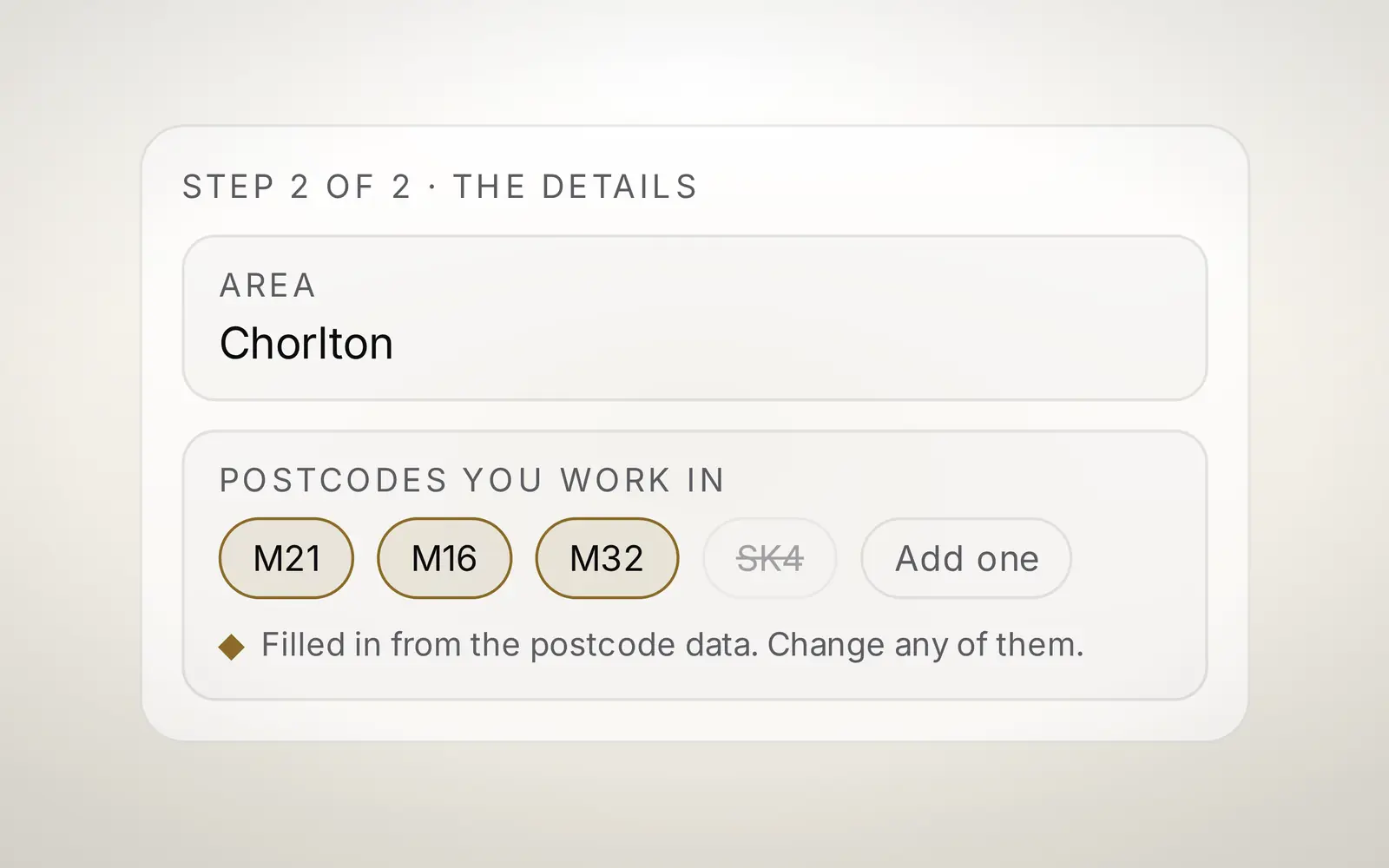 He types the town and the postcodes arrive from the data, not from a guess. He strikes out the one he does not travel to, and writes the line about the area himself.
03What it did, and what it has not
He types the town and the postcodes arrive from the data, not from a guess. He strikes out the one he does not travel to, and writes the line about the area himself.
03What it did, and what it has not
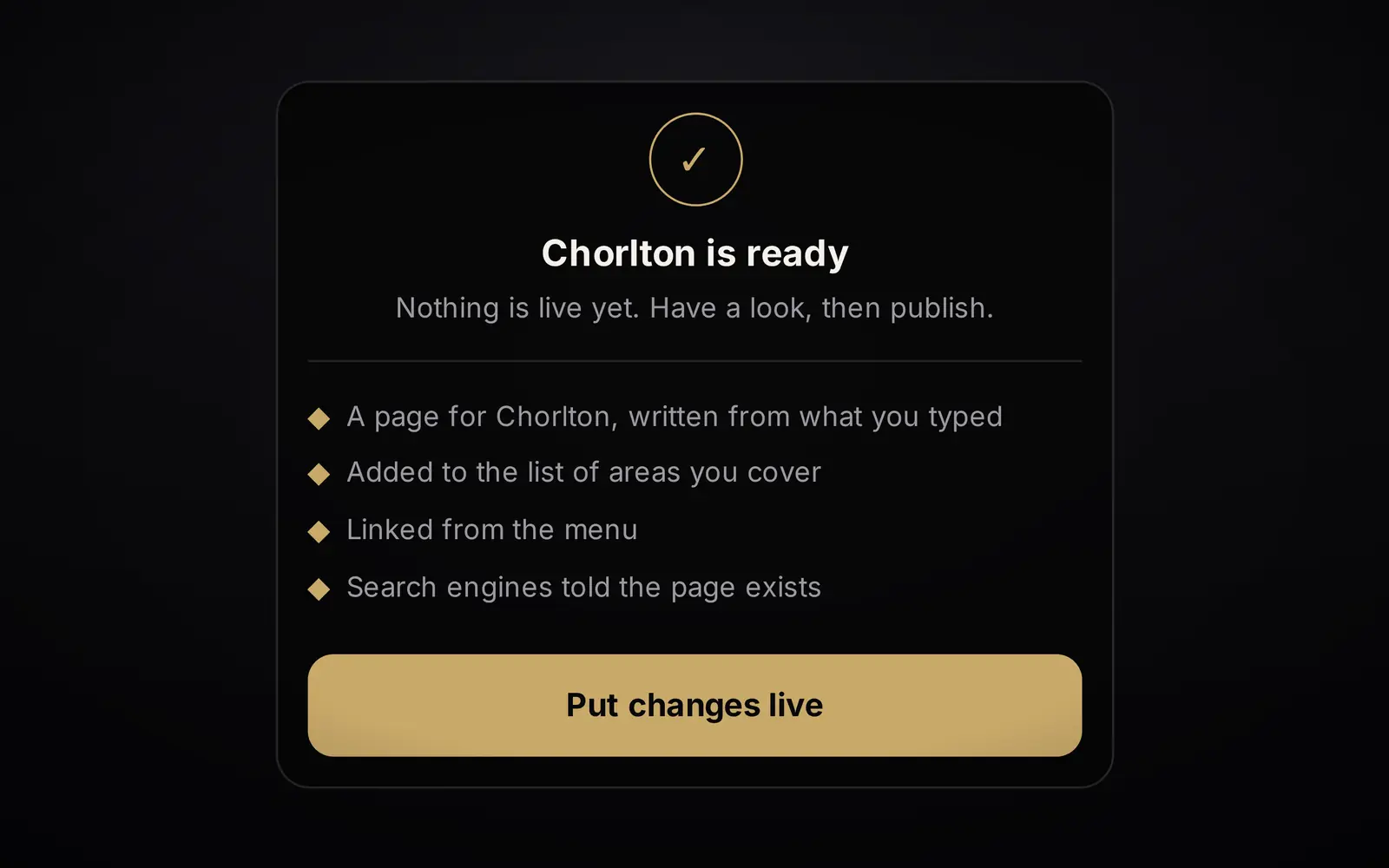
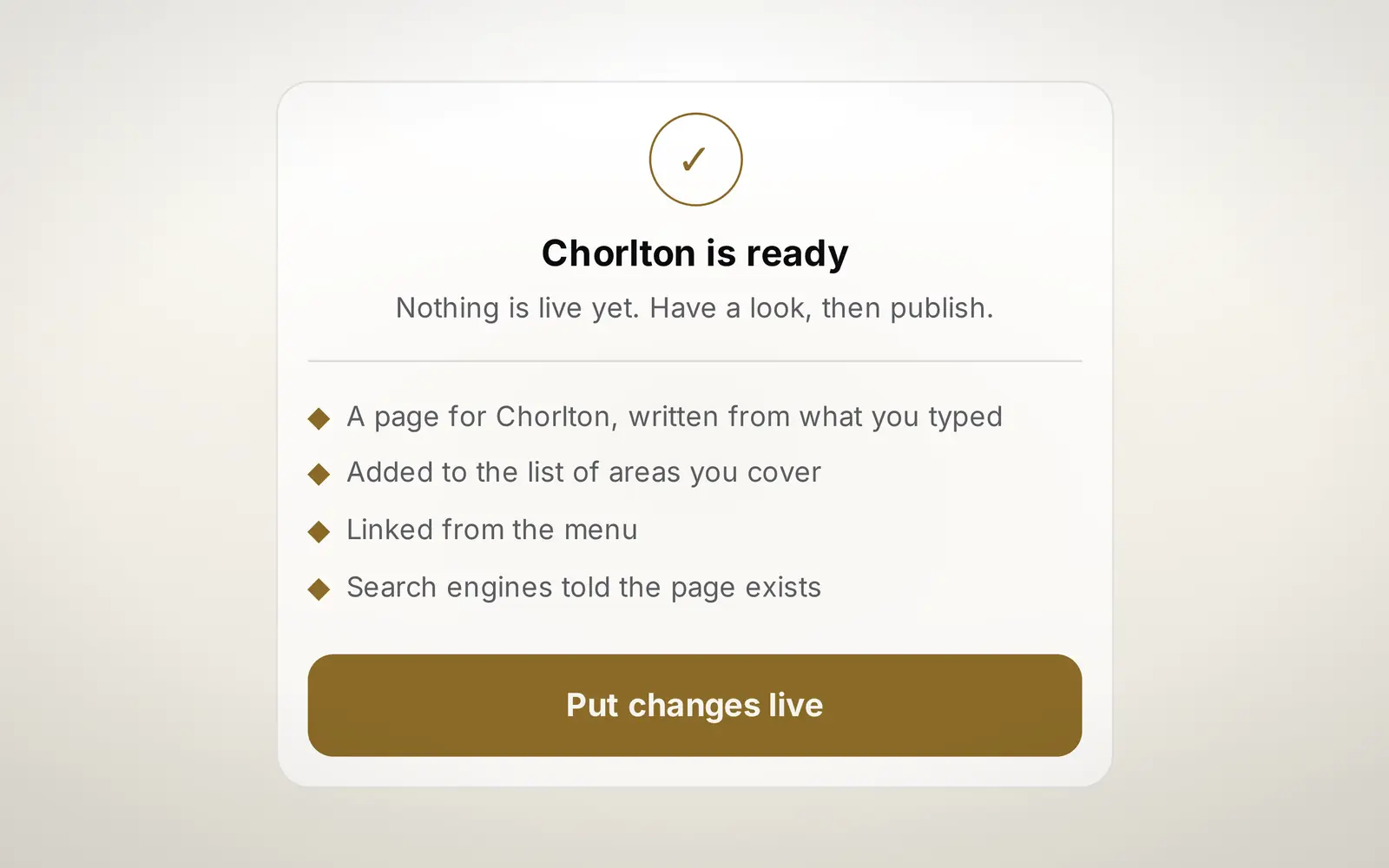 PoshLayer™ Flow writes the page, lists it, links it, and tells search engines it exists. Then it stops — nothing is public until he presses the second button.
04His site, that afternoon
PoshLayer™ Flow writes the page, lists it, links it, and tells search engines it exists. Then it stops — nothing is public until he presses the second button.
04His site, that afternoon
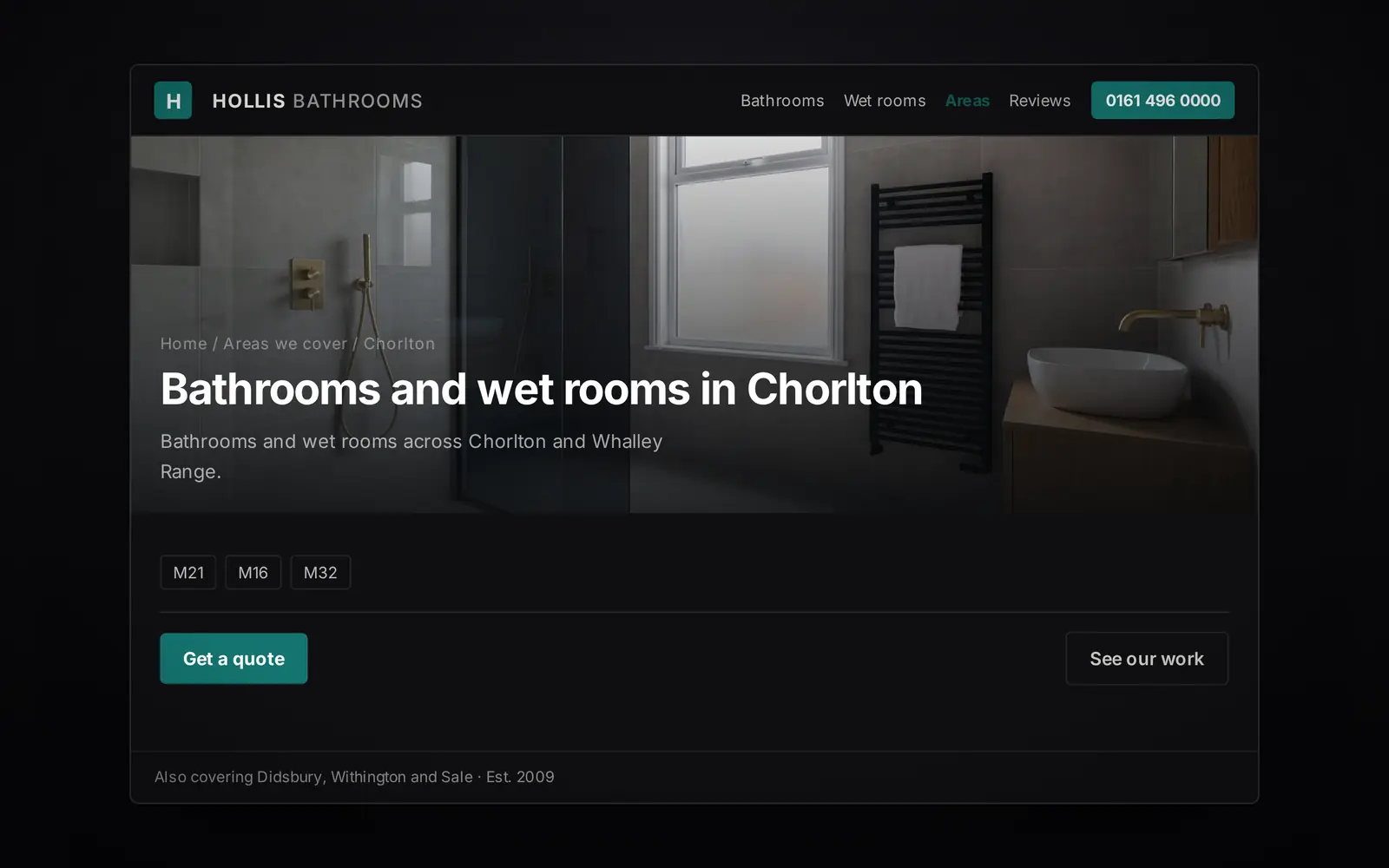
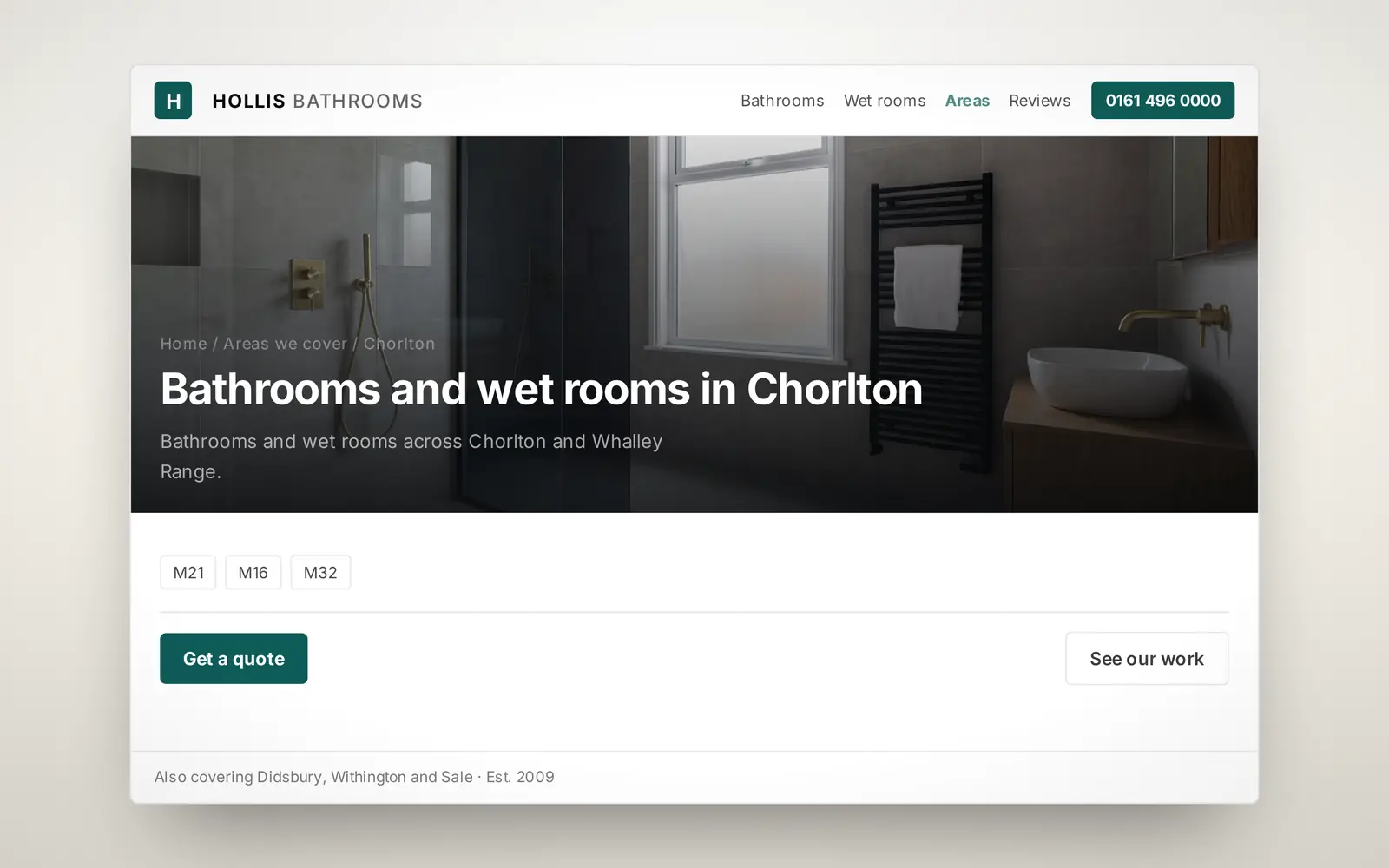 The page is live on his own site, in his own brand, in the navigation. The line under the heading is the one he typed.
Why the fields are yours
This is the part that is not obvious, and it is what stops Flow being a contact form with ambition.
The fields in that screen are not a form we designed. They are read from your own website’s structure — the actual shape of your area pages, your gallery, your services — so what you are filling in is the real thing rather than a request for someone else to fill it in later. When your site gains a field, the flow gains it too.
Which is also why the flows differ per business. A fitter has add an area you cover. A clinic has add a treatment. A shop has put a product on sale until Sunday. Nobody is choosing from a menu of generic actions.
What it will and will not do on its own
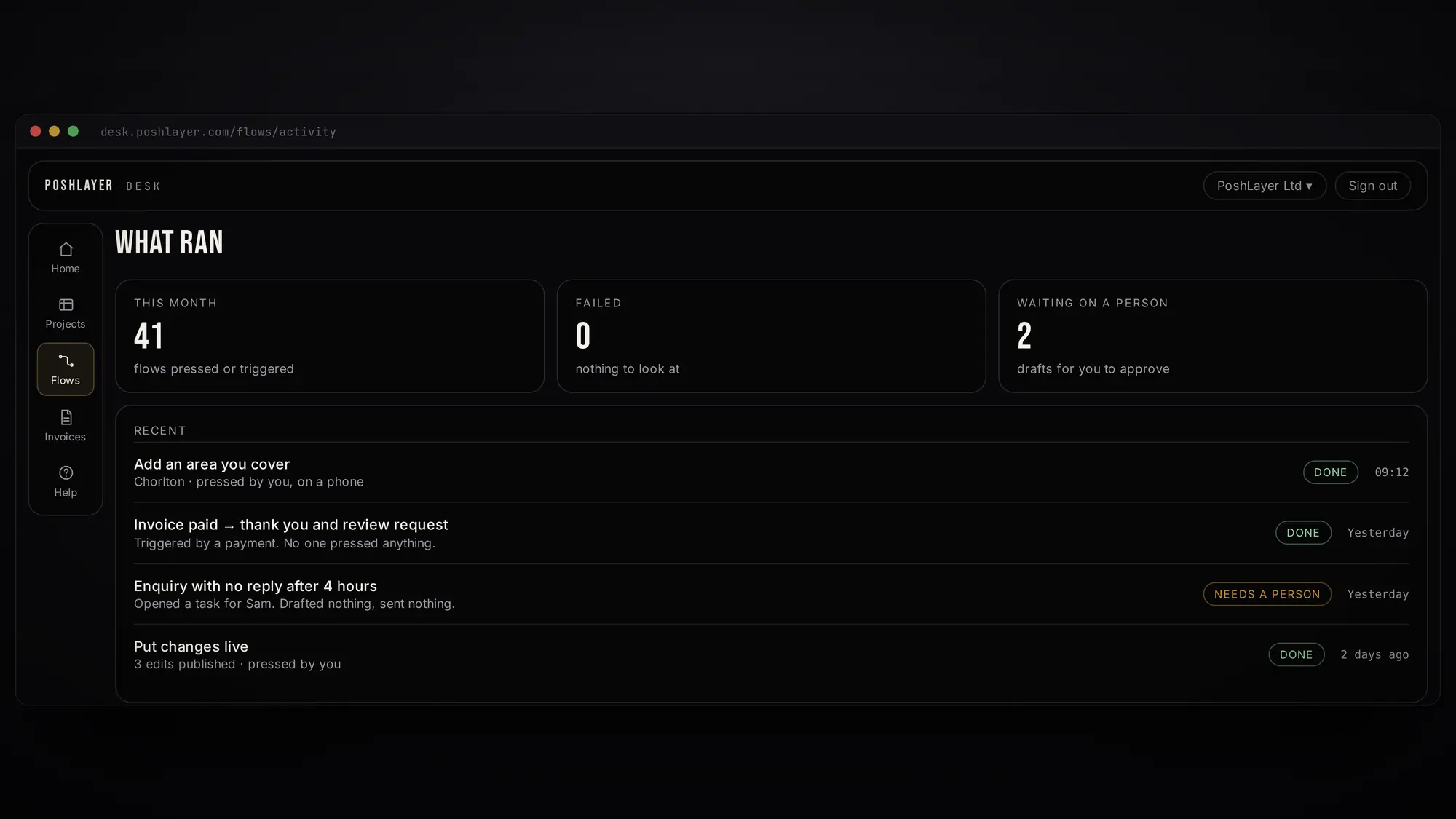
Some flows you press. Others run when something happens — an invoice is paid, an enquiry arrives, a project moves a stage. Both end up in the same place, which is a list of what ran.
The rule underneath is worth saying plainly, because it is the difference between automation you can leave running and automation you cannot:
Anything a flow does unattended is reversible, or a draft. It can write an invoice; it cannot send one. It can prepare a proposal; a person presses the button. It can open a task for whoever is on it. Where money or a customer’s inbox is involved, the last step is always a human, by construction rather than by policy.
You can see everything it did
An automation you cannot inspect is a rumour.PJ @ PoshLayer
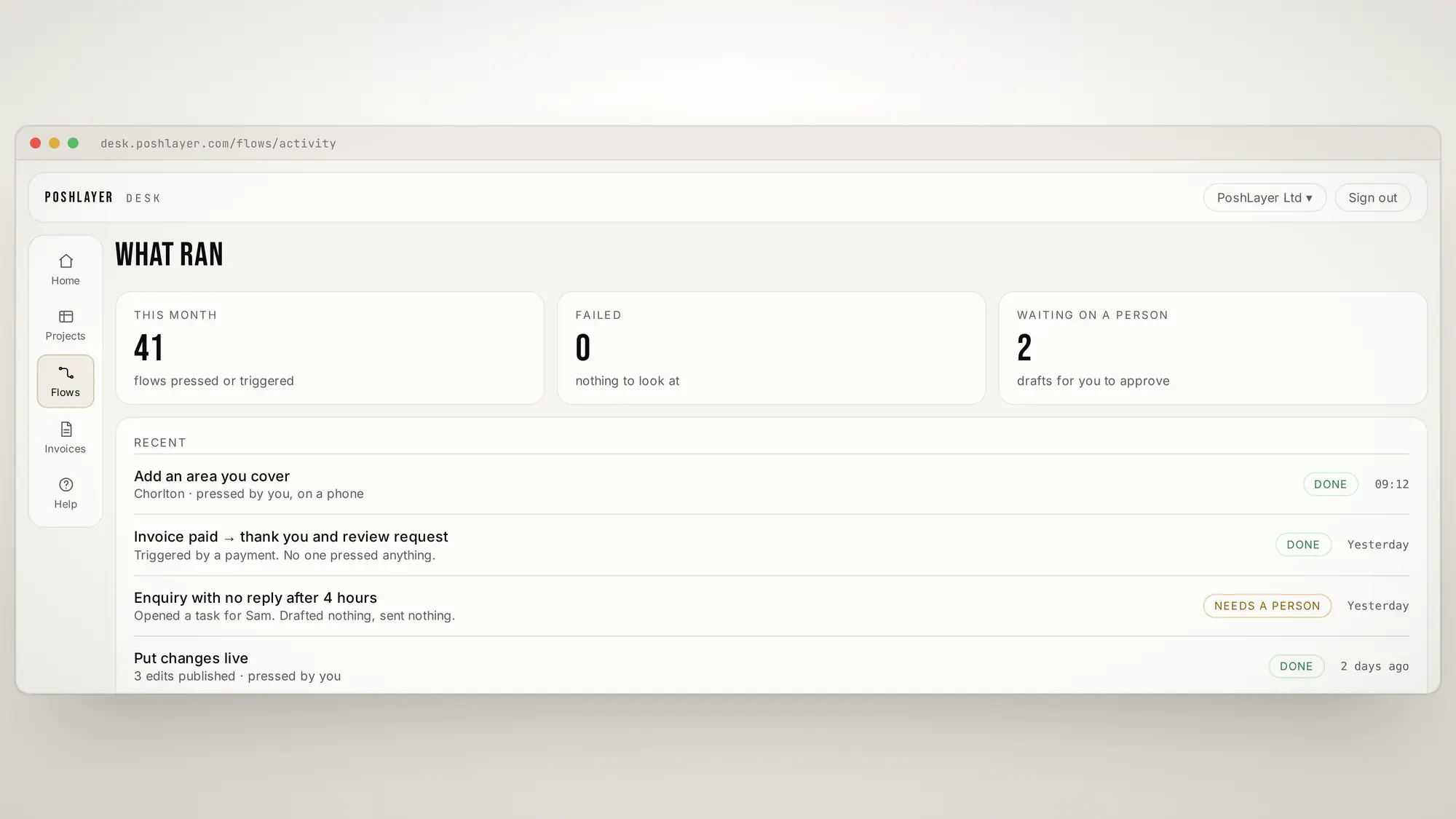
An automation you cannot inspect is a rumour. Every run is listed — what it was, what set it off, whether a person pressed it or a payment did, and what it changed. Including the ones that matched nothing, which is the only way to tell “nobody was listening” apart from “nothing happened”.
Flows arrive switched off. Turning one on is something a person does on purpose, once, having read what it does.
Where it lives
Flow is part of PoshLayer™ Desk, which comes with every package — so it is in the browser on your laptop and in the app on your phone, with the same flows in both.
The phone is not the lesser one here. It is where this actually gets used: the van, the ward, the shop floor, the ten minutes between two jobs.
Getting yours mapped
The flows a business needs are obvious once you watch it work for a fortnight, and not before. So we map them from what you already do repeatedly rather than handing over a list to choose from.
Tell us the three things you keep meaning to get round to. Those are usually the first three flows.